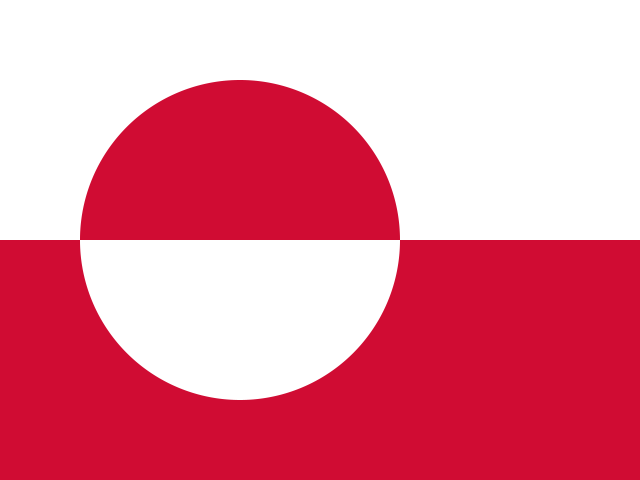
An island under an ice sheet
Greenland is the world's largest island and an autonomous territory of the Kingdom of Denmark, not a sovereign country. Of its 2.2 million square kilometres, about 1.7 million lie beneath an ice sheet up to 3 kilometres thick, a mass smaller only than Antarctica's. No roads join the coastal towns, so everyone and everything moves by sea or air. In the far north the polar night can last five months.
That ice matters far beyond the island, because melting all of it would raise global sea level by about 7.4 metres. In September 2026 the Geological Survey of Denmark and Greenland reported that the sheet had lost more ice than it gained for the 30th year running, a span long enough, it argued, to count as a climate signal. Estimates for the latest year range from about 135 to 173 billion tonnes, depending on the method.
Hunters, farmers and the road to self-rule
People first arrived about 4,500 years ago, and several cultures came and faded. Today's Greenlanders descend from the Thule people, who reached the island from Alaska around 1200 and spread across it with dog sledges, kayaks and large umiaq boats.
They found Norse farmers already there. Settlers under Erik the Red, exiled from Iceland, had reached the southwest in the 980s, and their colonies thrived for centuries, in part by supplying Europe with walrus ivory. By the mid-fifteenth century they were gone. Cambridge researchers link the end partly to falling ivory prices, and a cooling climate and the Black Death have also been proposed.
Lasting contact with Europe resumed in 1721, when the Norwegian-born missionary Hans Egede arrived, and Statistics Greenland dates colonial status from that year. A royal trading monopoly ran from 1776 until 1950 and helped keep the island isolated. Denmark's 1953 constitution then made Greenland part of the Danish state, with two seats in parliament.
Rapid change followed, and much of it was imposed. Development plans concentrated people in towns on open water. In 1953, Cultural Survival has reported, 87 Inughuit were given four days to leave their home to make way for an American base, and in 2003 Denmark's Supreme Court rejected their bid to return. AFP reports that about 4,500 women were fitted with contraceptive coils without consent between the late 1960s and 1992. Denmark's prime minister apologised in Nuuk in September 2025.
Greenlanders meanwhile gained control step by step. Home rule began on 1 May 1979, and after a 1982 referendum, fought over fishing rights, the island left the European Community in 1985. In November 2008, 75.5 percent of voters backed self-government, which took effect on 21 June 2009. Foreign and security policy stayed with Denmark, but the act sets out a path to independence through negotiation, a Greenlandic referendum and Danish parliamentary consent.
A small society on a long coast
About 57,000 people live in Greenland, 88 percent of them born there, and Nuuk, the capital, has just over 20,000. Greenlandic is the main language, with Danish alongside it. Statistics Greenland expects the population to age and, on current trends, to fall below 50,000.
The economy rests on the sea. Fish and shellfish provide over 90 percent of exports. The public sector accounts for almost half of jobs, supported by a Danish block grant fixed at DKK 3.4 billion in the 2009 act and recorded at about DKK 4.3 billion in 2024. Mining remains limited despite deposits of rare earths and other minerals, and money shapes the independence debate. In a January 2025 poll, 56 percent said they would vote for independence, yet 45 percent would not want it if living standards fell.
The American question
American forces arrived under a 1941 defence agreement, and a 1951 pact kept them on the island. The US had considered acquiring Greenland before, and in 2019 the US president raised buying it. Pressure returned from late 2024, with force not ruled out. In the same 2025 poll, 85 percent of Greenlanders opposed joining the United States.
On 17 January 2026 the US president announced 10 percent tariffs on eight European countries, linked to their troop deployments to Greenland and to a demand to buy the island. On 21 January, at Davos, he dropped the tariffs, set aside military force and cited a framework agreed with NATO's secretary general. Denmark's prime minister replied that sovereignty could not be negotiated.
The three governments signed an agreement in New York on 22 September 2026. It amends the 1951 pact, lets the US expand Pituffik Space Base, adds defence areas at Narsarsuaq and Mestersvig, and requires joint consent for any military presence by non-NATO countries. Denmark's prime minister says it respects the kingdom's sovereignty, Greenland's says it recognises a people's right to self-determination, and it would still apply after independence.
On 3 November 2026 Greenland's parliament approved the deal by 16 votes to none, with seven abstentions, though critics argued it brought Greenland too little. The Danish parliament is due to begin debating it on 12 November, and it takes effect only once that process is finished. The 2009 act still leaves any move to independence to begin with a decision by Greenlanders themselves.