Mountains and a broken coast
South Korea fills the southern half of the Korean Peninsula, and most of it is mountain. The Han, Nakdong and Geum rivers all begin in the Taebaek range. The eastern shore has been rising and runs smooth, while the southern and western shores have been sinking, which has left them jagged and scattered with some 3,579 islands.
Offshore lies Jeju, whose volcanic cone, Hallasan, is the highest point in the country. It is also home to the haenyeo, women who gather shellfish from the seabed without oxygen masks, holding their breath for about a minute on dives of around 10 metres. Some are in their eighties, and UNESCO recognised their culture in 2016.
An alphabet made by a king
The Joseon dynasty, founded in 1392, moved the capital to what is now Seoul and made Neo-Confucianism the state ideology. Its finest legacy is the script Koreans still use. Writing had meant Chinese characters, which shut most people out, and King Sejong answered with 28 new letters, shown to his court in the last month of 1443 and published in 1446. His preface says plainly that Korean sounds unlike Chinese and that many people could not write down their thoughts.
The educated were not grateful. Mastery of characters was a mark of status, critics appeared at once, and a later king persecuted the script in 1504 after finding himself criticised in it. Not until 1894 did a Korean government name hangul its preferred writing.
Sixteen years later Japan annexed the country. On 1 March 1919 a declaration of independence that asked for no violence was read in Seoul, and protests spread until somewhere between 800,000 and two million people had joined. They were often violently suppressed: Japanese officials counted 553 killed in the first six weeks, while a Korean history of 1920 gave 7,509. Colonial rule hardened as Japan went to war. Korean names and eventually the language itself were pushed out, about 5.4 million Koreans were mobilised for the war effort, many of them by force, and many women and girls were forced into sexual slavery as so-called comfort women.
One line on a map
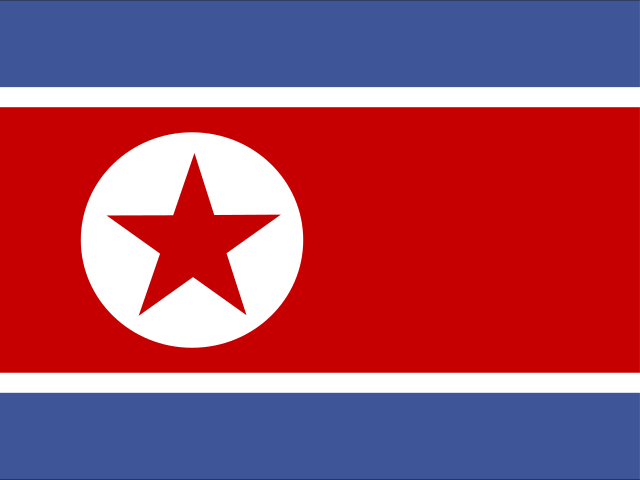
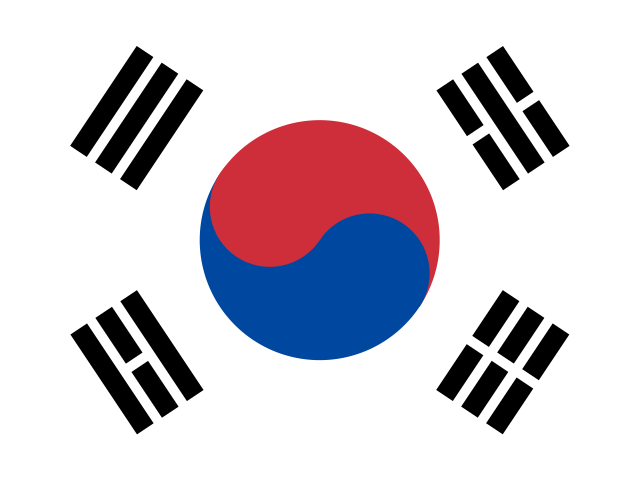
In the last days of the Second World War, two young American officers using a National Geographic map chose the 38th parallel as the boundary between American and Soviet occupation zones. No experts on Korea were consulted. When the Soviets rejected nationwide elections under UN supervision, a vote went ahead in the south alone, and the Republic of Korea was founded on 15 August 1948. The North followed on 9 September.
Blood had already been spilled. Rebels attacked police stations on Jeju on 3 April 1948, and the crackdown that followed lasted nearly six years. NPR reported official estimates of some 30,000 dead, the great majority killed by police, soldiers and right-wing paramilitaries, and by August 2026 the state had formally recognised 15,286 victims. Under military rule the subject was taboo.
North Korea invaded on 25 June 1950. Three years of war killed millions of soldiers and civilians, and the armistice signed at Panmunjom on 27 July 1953 left the two sides holding almost the same ground as when they began. It was no peace treaty. Forces withdrew from a strip 4,000 metres wide, and that Demilitarized Zone remains the country's one land border.
From a generals' republic to a citizens' one
A coup in 1961 brought Park Chung Hee to power, and his first Five-Year Plan began the next year with export promotion among its aims. Growth leaned on cheap labour and family conglomerates such as Samsung, LG and Hyundai, while human rights were set aside. World Bank figures show how far it went: output per head was about $159 in 1960 and about $36,000 in 2025.
Democracy took longer. After Park's assassination in 1979, General Chun Doo-hwan's junta spread martial law across the country, and in May 1980 troops fired on students demonstrating in Gwangju. The city rose and was crushed within ten days. The government counted 165 dead, while later estimates run from hundreds to about 2,000. Seven years on, the death under police torture of a Seoul National University student, and its cover-up, fed nationwide protests from 10 to 29 June 1987, which forced the regime to accept direct presidential elections.
That settlement was tested on 3 December 2024, when the president declared martial law and sent soldiers to the National Assembly. Lawmakers got inside and voted the decree down, it lasted six hours, and on 4 April 2025 the Constitutional Court unanimously removed him.
Today's anxieties are quieter. Exports reached a record $709.7 billion in 2025, with chips alone worth $173.4 billion, yet few children are being born. Fertility fell to 0.72 in 2023, reported as the world's lowest, before recovering to 0.80 in 2025. Just over half of registered residents, 50.7 percent at the end of 2023, live in and around Seoul.
The past stays close, though. When Han Kang became the first South Korean writer to win the Nobel Prize in Literature in 2024, her novels already included one about Gwangju and another about Jeju. The two massacres that could once hardly be mentioned at home now reach readers through a Nobel laureate's fiction.